
Pitmaster Pork Shank & Oxtail Stew
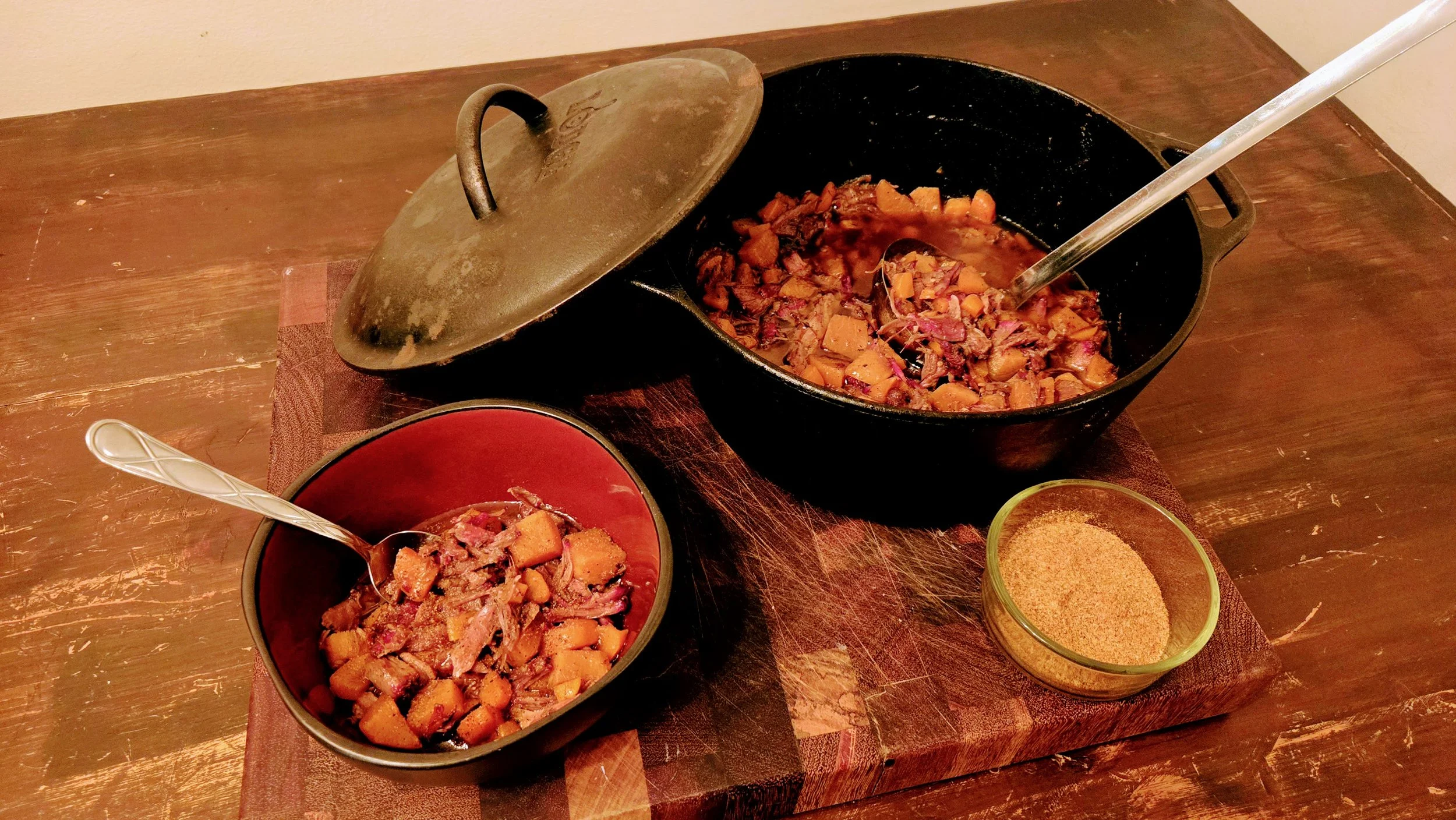
Real smoke. Two slow-cooked meats. One seriously rich pot of stew.
Smoked pork shanks and oxtail slowly braised with Yukon Gold potatoes, carrots, onion, garlic, herbs, and rich beef broth until the meat falls from the bone and the broth becomes naturally thick and silky.
This is the kind of stew built for a cold evening, a Dutch oven, and enough time to let tough cuts turn into something worth waiting for.
Smoke first. Braise second. Let time do the rest.
Pork shanks and oxtail have something important in common: neither one wants to be rushed.
Both cuts contain plenty of connective tissue that slowly breaks down during a long cook. Oxtail brings deep beef flavor and collagen that gives the broth body, while pork shanks provide another layer of richness and plenty of tender meat.
Instead of simply dropping everything into a pot, the meat gets seasoned with Firehouse Seasoning and smoked first.
Then it moves into a Dutch oven with beef stock, aromatics, herbs, potatoes, and carrots to slowly braise until everything becomes tender.
The result is a hearty, smoke-forward stew with fall-apart meat, creamy potatoes, and the kind of broth that can only come from giving collagen-rich cuts enough time to do their thing.
Recipe at a Glance
Yield: Approximately 8 servings
Serving Size: About 1½–2 cups
Prep Time: 20 minutes
Smoke Time: 1½–2 hours
Braise Time: Approximately 3–3½ hours
Total Time: About 5–6 hours
Smoker Temperature: 250°F
Braising Temperature: 300°F
Ingredients
🥩 Meat
2½ lbs pork shanks
2 lbs oxtail
2 Tbsp Firehouse Seasoning, divided
Coarse-ground black pepper, to taste
🥕 Vegetables
500 g Yukon Gold potatoes, cut into roughly 1½-inch chunks
300 g carrots, cut into large pieces
1 large yellow onion, diced
4–6 garlic cloves, minced
🍲 Braising Liquid
4 cups low-sodium beef stock, plus more as needed
3 Tbsp ketchup
1 Tbsp Worcestershire sauce
Apple cider vinegar, up to 1 Tbsp as needed at the finish
🌿 Seasonings & Herbs
2 bay leaves
1 tsp dried thyme
or 4–5 sprigs fresh thyme
1 tsp smoked paprika
½ tsp crushed red pepper flakes, optional
Kosher salt, only if needed after cooking
Instructions
1. Preheat the Smoker
Preheat the smoker to 250°F.
Pecan or oak are excellent choices for this stew.
Hickory also works if you prefer a stronger smoke profile.
2. Season the Meat
Pat the pork shanks and oxtails dry.
Season all sides with approximately 1½ tablespoons Firehouse Seasoning.
Finish with coarse-ground black pepper to taste.
Let the meat sit while the smoker finishes preheating.
Kirby Rule: Season before smoking. We're building flavor in layers rather than trying to fix everything once it reaches the Dutch oven.
3. Smoke the Pork Shanks & Oxtail
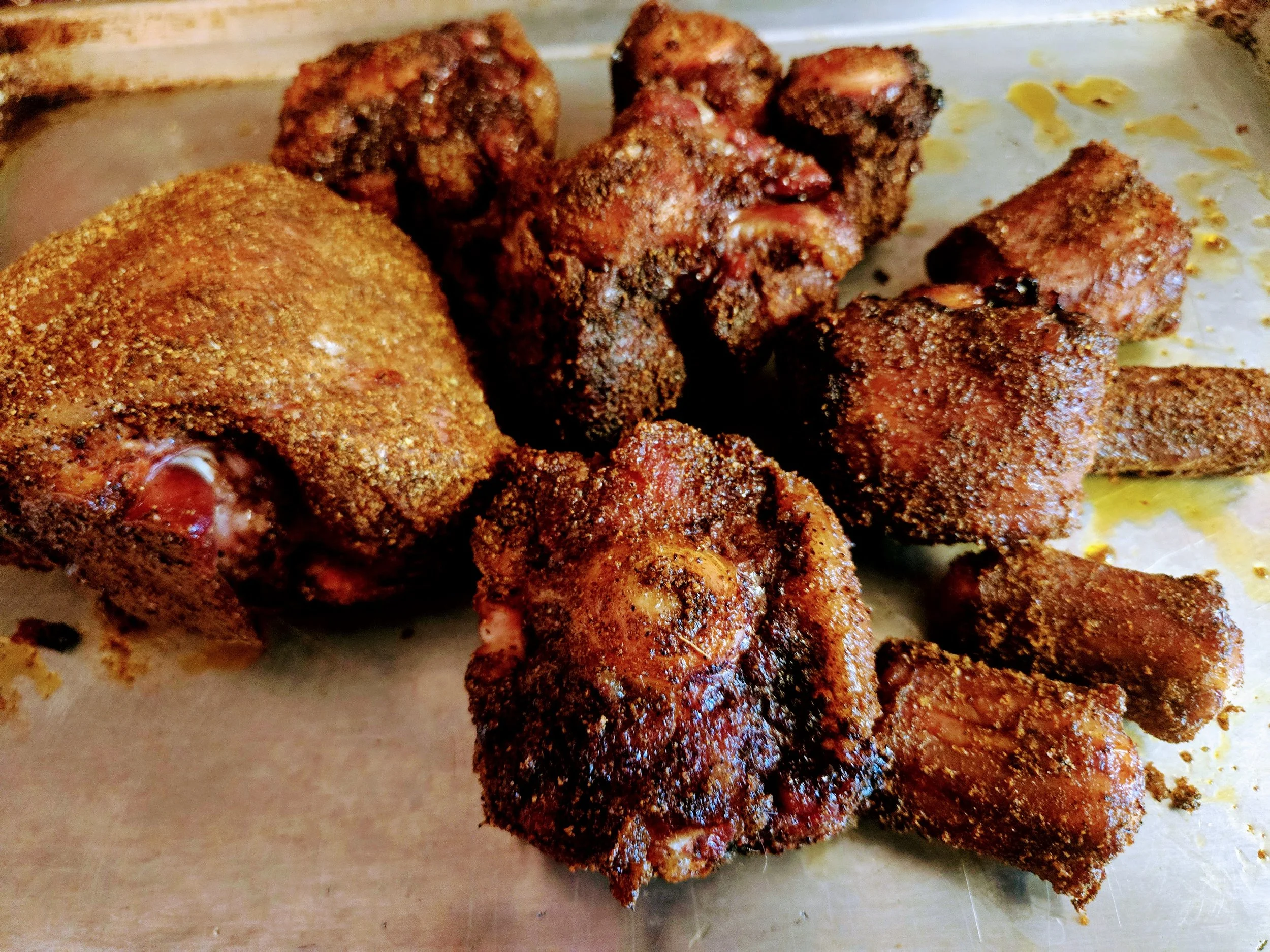
Place the pork shanks and oxtails directly on the smoker grates.
Smoke at 250°F for 1½–2 hours.
You're not trying to make the meat tender yet.
At this stage, we're looking for:
Smoke flavor
Exterior color
The beginning of a bark
Rendered surface fat
The braise will handle the tenderness.
4. Build the Stew Base
Once the meat has finished smoking, place a large Dutch oven over medium heat.
Add a small amount of avocado oil only if the pot needs it.
Add the diced onion and cook for 4–5 minutes, stirring occasionally, until softened.
Add the garlic and cook for another 30–60 seconds.
5. Cook the Ketchup & Seasonings
Add:
3 Tbsp ketchup
Remaining ½ Tbsp Firehouse Seasoning
1 tsp smoked paprika
½ tsp crushed red pepper flakes, if using
Cook for approximately 2–3 minutes, stirring frequently.
The ketchup should darken slightly and become noticeably thicker.
Kirby Rule: Treat the ketchup like tomato paste. Cooking it before adding the stock concentrates the tomato flavor and takes away the raw ketchup character.
6. Deglaze
Add the Worcestershire sauce and approximately 1 cup beef stock.
Scrape the bottom of the Dutch oven thoroughly to release everything that has developed on the bottom.
Add the remaining beef stock.
Stir in the bay leaves and thyme.
7. Add the Smoked Meat
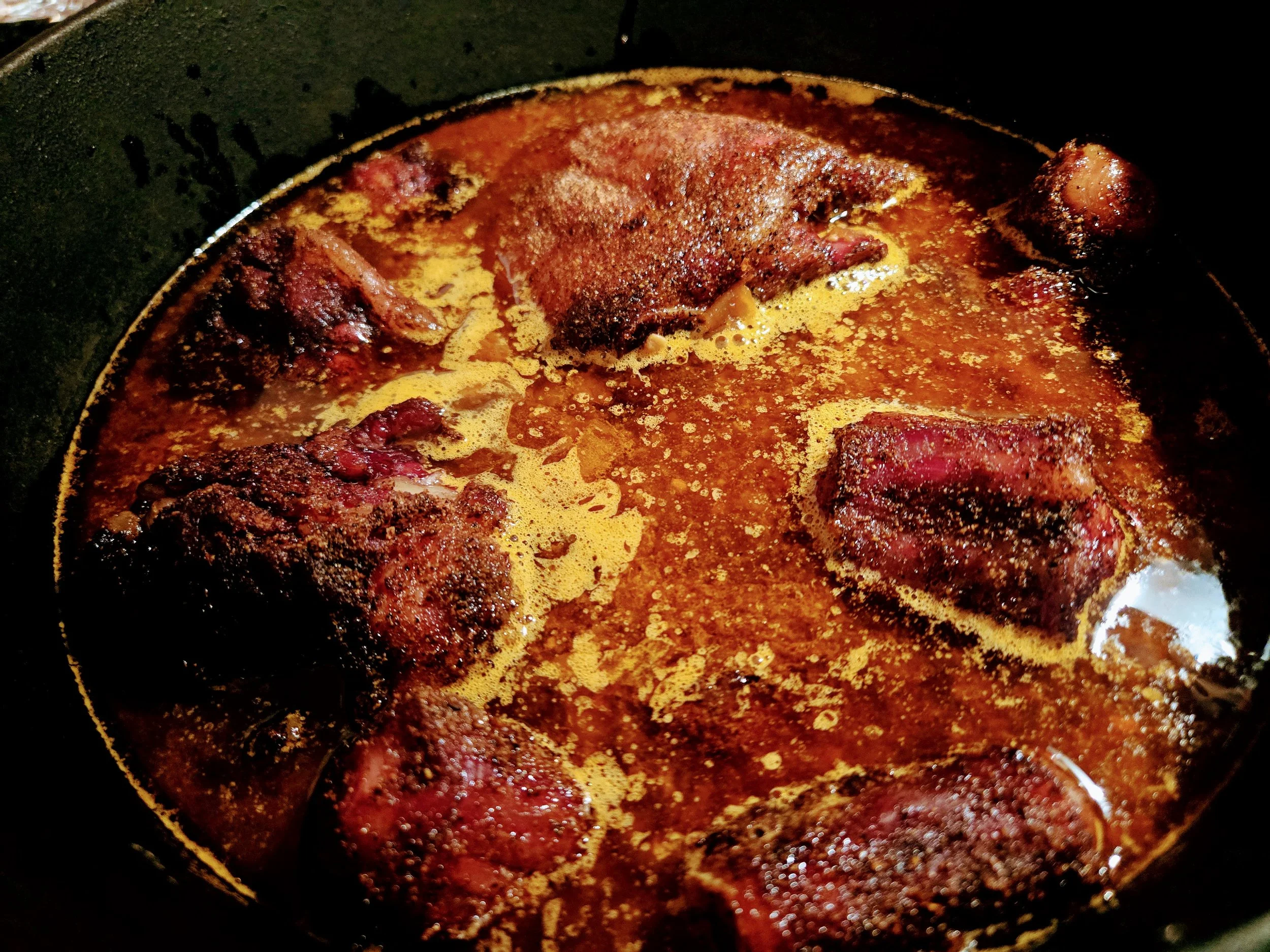
Nestle the smoked pork shanks and oxtails into the broth.
The liquid should come approximately two-thirds of the way up the meat.
It doesn't need to completely cover it.
Add a little additional beef stock or water if necessary.
Cover the Dutch oven.
8. Braise
Place the covered Dutch oven in a 300°F oven or smoker.
Braise for approximately 2–2½ hours.
Check the meat.
It should be noticeably tender, and the connective tissue should be beginning to break down.
If the meat is still tough, continue cooking and check again after approximately 30 minutes.
Kirby Rule: Don't cook collagen-rich meat by the clock alone. If it's still tough, it usually needs more time.
9. Add the Potatoes & Carrots
Add:
500 g Yukon Gold potatoes
300 g carrots
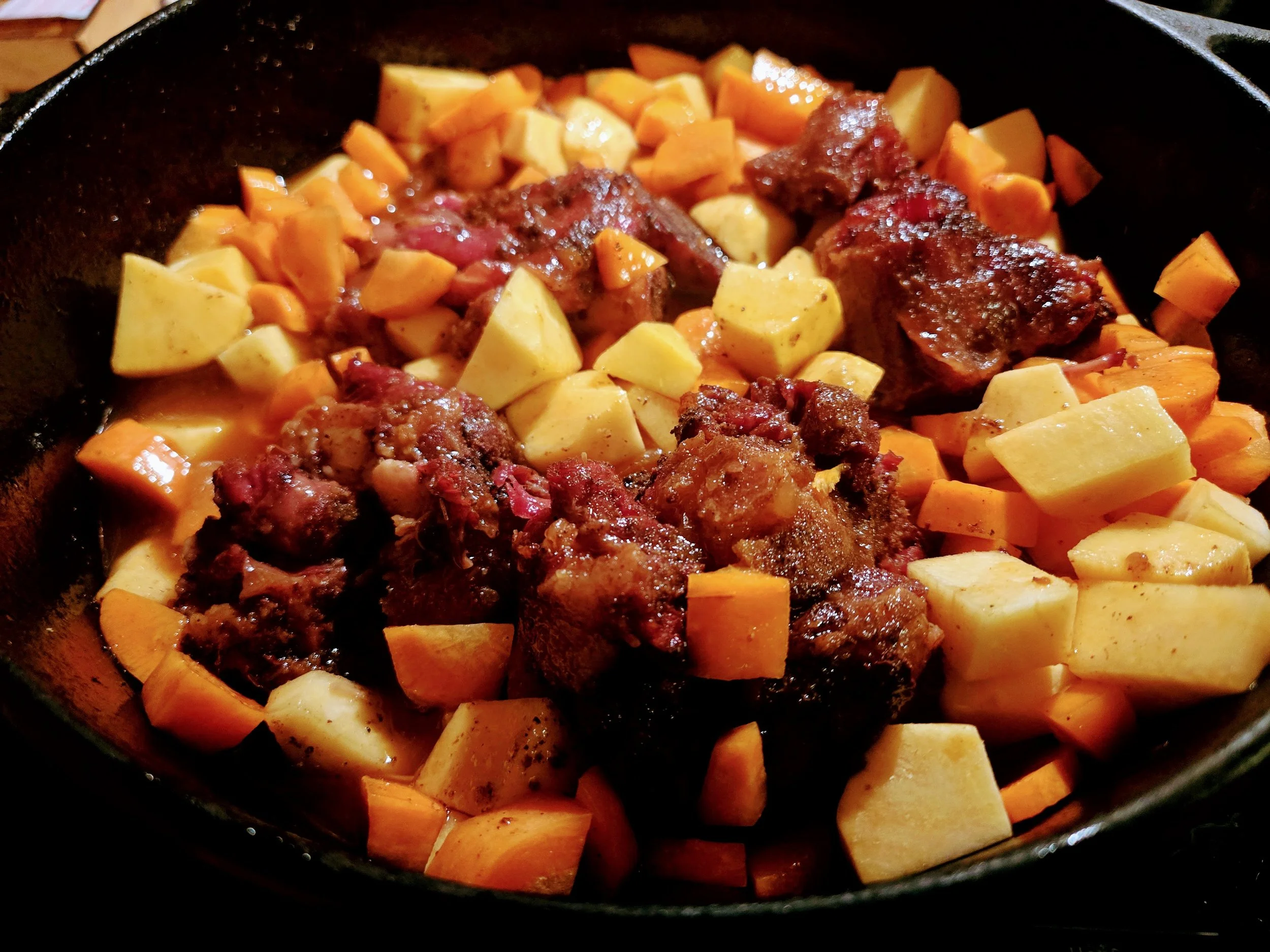
Gently work the vegetables into the braising liquid.
Cover again.
Continue cooking at 300°F for another 45–60 minutes, or until the potatoes and carrots are fork-tender and both the pork and oxtail are nearly falling from their bones.
Kirby Rule: Add the root vegetables later in the cook. They need enough time to absorb the broth without spending hours turning into purée.
10. Pull the Meat
Carefully remove the pork shanks and oxtails from the Dutch oven.
Allow them to cool just enough to handle safely.
Remove the meat from the bones.
Discard:
Bones
Tough connective tissue
Large pieces of unrendered fat
Shred or roughly chop the usable meat.
Return the meat to the Dutch oven.
11. Reduce the Stew
Remove the bay leaves and any woody thyme stems.
Leave the Dutch oven uncovered and simmer for approximately 10–20 minutes, or until the broth reaches your preferred consistency.
The collagen from the oxtail and pork shanks should naturally give the broth considerable body.
No flour or cornstarch should be necessary.
12. Taste Before You Finish
Taste the stew.
Only now decide whether it needs additional salt.
Between the Firehouse Seasoning, Worcestershire sauce, ketchup, and beef stock, it may already have enough.
Then judge the richness.
If the broth feels heavy, add apple cider vinegar 1 teaspoon at a time.
Taste after each addition.
Use up to approximately 1 tablespoon, but stop as soon as the stew tastes balanced.
Kirby Rule: Acid should make a rich stew taste brighter. You shouldn't actually think, “This tastes like vinegar.”
13. Rest
Turn off the heat and allow the stew to rest for approximately 10–15 minutes.
The broth will continue to settle and thicken slightly as it rests.
14. Serve
Ladle the stew into bowls, making sure every serving gets plenty of pork shank, oxtail, potatoes, carrots, and rich smoky broth.
Finish each bowl with a small pinch of Firehouse Seasoning, sprinkled lightly over the top just before serving.
Add freshly cracked black pepper if desired.
Kirby Kitchen Tip: The stew is seasoned throughout the cook, but a small pinch of Firehouse Seasoning at the table brings the garlic, pepper, paprika, and heat back to the front. Start with a little and add more to taste.
Performance Notes
🐂 Why Oxtail?
Oxtail contributes more than beef flavor.
Its connective tissue contains collagen that breaks down during the long braise and turns into gelatin.
That's what gives the finished broth its rich, silky body.
🐖 Why Pork Shanks?
Pork shanks provide another collagen-rich cut with plenty of meat and deep pork flavor.
Using pork alongside the oxtail creates a stew with multiple layers of flavor without requiring the entire pot to be made from oxtail.
🔥 Smoke Before the Braise
Smoking the meat first gives us something a Dutch oven alone can't create.
The meat develops real wood-smoke flavor and exterior color before spending several hours surrounded by liquid.
The braise then takes care of breaking down the tough connective tissue.
🥔 Let the Potatoes Soak It Up
Yukon Gold potatoes bring a naturally creamy texture while holding their shape well during the braise.
As they cook, they absorb the rich broth created by the smoked pork shanks, oxtail, Firehouse Seasoning, and aromatics, giving every bite another layer of flavor.
Cut them into larger chunks so they become tender without disappearing into the stew.
Sometimes the classic choice is the right choice.
🍅 No Tomato Paste? No Problem.
Ketchup works surprisingly well in a stew like this when it's treated properly.
Cooking it for a few minutes before adding the stock concentrates the tomato flavor and reduces the recognizable ketchup character.
Because ketchup already contains sweetness, acidity, and salt, the rest of the recipe is seasoned accordingly.
🔥 Finish With Firehouse
Long braising creates deep, mellow flavors as the pork, beef, smoke, vegetables, and seasonings come together.
A small pinch of Firehouse Seasoning added directly to the finished bowl brings back a brighter hit of garlic, pepper, paprika, and heat.
It's optional, but if you enjoy a bold flavor profile, don't skip it.
Fuel Profile — Estimated Per Serving
Calories: ~450 kcal | Protein: ~35 g | Carbohydrates: ~22 g | Net Carbs: ~19 g | Fiber: ~3 g | Fat: ~25 g
Based on approximately 8 servings using 2½ pounds bone-in pork shanks, 2 pounds bone-in oxtail, 500 g Yukon Gold potatoes, carrots, beef stock, ketchup, and seasonings. Nutrition is estimated and will vary depending on the actual yield and fat content of the pork shanks and oxtail and the specific ingredient brands used.
Make It Your Own
More Heat: Increase the red pepper flakes or add a slightly larger finishing pinch of Firehouse Seasoning.
More Smoke: Use hickory instead of pecan or oak.
More Vegetables: Add celery, mushrooms, or additional carrots.
Thicker Stew: Simmer uncovered longer after returning the meat.
More Broth: Add additional beef stock if you prefer something closer to a soup.
Brighter Finish: Add another small splash of apple cider vinegar immediately before serving.
Storage
Refrigerator
Cool the stew and store in an airtight container for up to 4 days.
This is one of those dishes that may taste even better the next day after the flavors have had more time to come together.
Freezer
Freeze in airtight freezer-safe containers for up to 3 months.
Thaw overnight in the refrigerator before reheating.
Reheating
Reheat gently on the stovetop.
The broth may become almost jelly-like when refrigerated.
That's a good thing.
It's the gelatin created by all that collagen. It will melt back into a silky broth as the stew reheats.
Performance Tip
“Tough cuts don't need shortcuts. They need smoke, time, and enough patience to let them become something better.”